Desk sharing is great. But it can quickly become a nightmare if introduced without guidelines. This is what shared desk
etiquette is for. From leaving the workstations clean to canceling desk reservations when employees get sick and using
lockers for personal belongings, there are some important desk-sharing rules.
This article includes 12 hot desking etiquette practices to help you easily set up this model and create your own rules.
Obviously, these are just examples, and you need to develop guidelines that match your company, workforce, and values.
Are you ready to discover how this system can really improve your on-site experience and turn your flexible office into
a success?
Shared desk etiquette explains the do’s and don’ts hybrid teams need to follow to have a productive and positive experience
when coming on-site. Therefore, respecting desk-sharing rules is a requirement for everybody within the company. As you’re
about to see, these simple principles are not only based on politeness and common sense but also on your firm’s values and
culture.
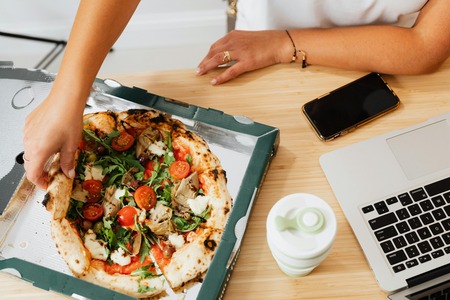
Employee Eating at their Desk
-> First and foremost, preventing scheduling conflicts is paramount in a hot desking environment. Nothing can be more irritating
and frustrating for your staff than arriving at the office only to discover that somebody is already seated where they were
planning to sit for the day. This is even more annoying in a hybrid model, as people don’t come on-site daily.
-> The typical image of a busy office is that it is noisy. Like in any working model, requesting phones to be on silent mode is
a must in a shared workspace. Open space leads to many disruptions, often caused by phones. The room doesn’t need to be completely
silent, yet it should maintain a certain noise level suitable for everyone.
-> At home, employees have their working environment set, like their computers, devices, and software. But when they come on-site,
they may find it difficult not to work with a familiar setup. So why not suggest that your staff adopt the Bring Your Own Device
(BYOD) model? They can use their own materials rather than company-provided ones.
-> Using a desk booking system means that your company already has a hybrid work model, and your teams are used to working from home
two days a week. A learning we have from recent years about viruses and illnesses is that it’s best to avoid meeting in person and
spreading it to staff members.
-> A desk is a very personal environment, sometimes even customized with pictures or decorations. But with desk sharing, this option
isn’t available. You must leave the place the way you found it, clean and tidy. Leaving any personal belongings on the desk is not
allowed. Everything must go on each rotation, and only basic stationery can be supplied by the company.

Implement an Employee feedack System
A flexible work environment also means that your staff won’t be present daily. In a traditional configuration, they usually have
spaces for keeping their possessions secure. But in a shared desk model, they might just leave their bags or bikes wherever they
can. This might result in an untidy and unsafe environment.
Once the process is running, create an employee satisfaction questionnaire to prevent any problems and continue to enhance your
office layout and management. Provide your teams with tools and platforms to communicate their needs and submit support requests
(it can be anonymous). This is crucial to know if any issue is going on as soon as possible as the goal is to set a positive and
dynamic environment so everyone is happy and productive.
 VENKY
VENKY